
Egyptian Blue Lotus
The Egyptian blue lotus is one of the most documented and least understood plants in history. It appears on temple walls, in burial chambers, in creation myths, and in modern pharmacology papers. It has been called sacred, narcotic, divine, and misidentified in equal measure.
I have been researching and working with Nymphaea caerulea for several years, and I am still learning. This page brings together what is actually known about the plant, its botanical identity, its history, its chemistry, its aroma, and its place in contemporary aromatherapy and perfumery.
Keep checking back regularly, i update and do corrections as my knowledge and research evolves. Whether you are here out of curiosity, for research, or looking for quality products, take your time. There is a lot to explore.

The Plant
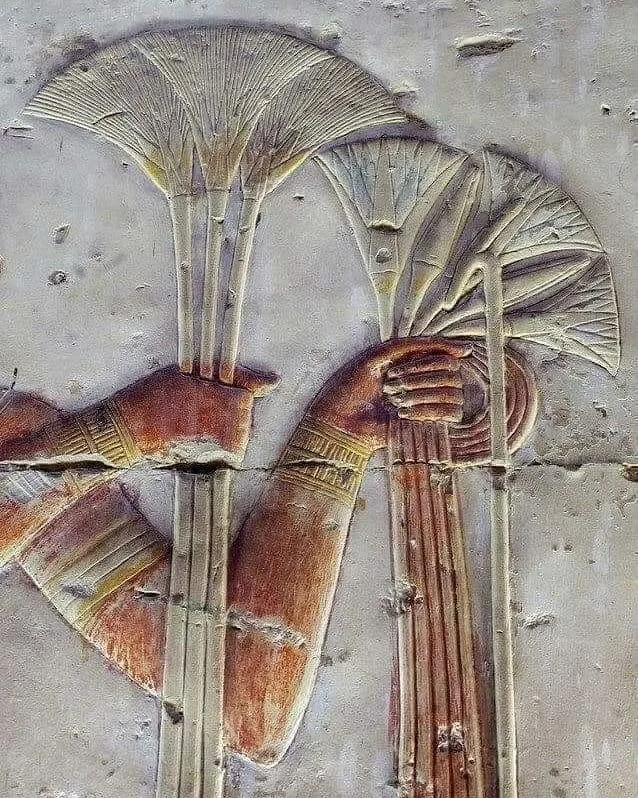
Nymphaea caerulea is a water lily, not a lotus in the strict botanical sense. It belongs to the family Nymphaeaceae and is native to the Nile Delta and East Africa. The confusion around its name is longstanding. Ancient Egyptians called it their sacred lotus, and the name has stayed, even though the true lotus — Nelumbo nucifera — is an entirely different plant from a separate genus, native to Asia.
The distinction matters practically. Nymphaea caerulea and Nelumbo nucifera have different chemical compositions, different aromatic profiles, and different properties. Many products sold online as Egyptian blue lotus are neither Egyptian nor caerulea. Knowing the botanical name and asking for it by name is the first step toward finding anything genuine.
The flower itself is star-shaped, pale blue to mauve, and blooms in the morning, closing by early afternoon. The leaves are large, round, and waxy, often with a purple underside. It grows in still, shallow freshwater and is sensitive to changes in water chemistry and flow.
Botanical Identity
Ecology and Sustainability
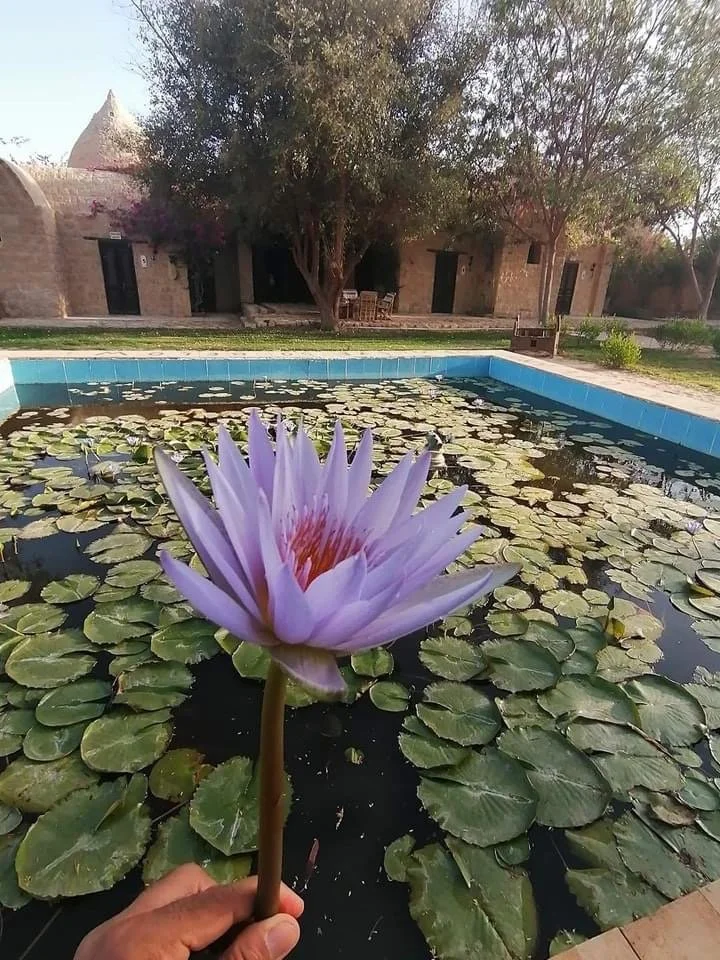
The blue lotus was once common along the banks of the Nile. Today it is rarely seen in its native habitat. The construction of the Aswan High Dam in the 1960s fundamentally altered the Nile’s flood cycle, changing the soil composition and water conditions that Nymphaea caerulea depends on. Wild populations declined sharply and have never recovered.
There are small efforts to revive it. New Hermopolis, an eco-lodge on the site of the ancient city of Amarna in Mallawi, south of Cairo, grows a small number of blue lotus plants in a natural pond among native sycamore and olive trees. I visited in March 2022 and it remains one of the few places in Egypt where you can see the plant growing as it once did along the river, there are a couple of other places i am also exploring soon, and will report back on. The scarcity of wild plants, combined with inconsistent species integrity in commercial cultivation, makes sourcing a serious consideration.
There’s a second thread to this, separate from wild population decline. Commercial cultivation across parts of Asia has been shown to produce hybrid water lilies rather than true Nymphaea caerulea, through crossing with other Nymphaea species (Yakandawala et al., 2017). This adds a genetic dimension to the sustainability picture: even where the plant is being grown rather than wild-harvested, the species itself can be diluted through unmanaged cross-breeding. It’s a further reason provenance and species verification matter as much as organic growing practice.
History and Culture
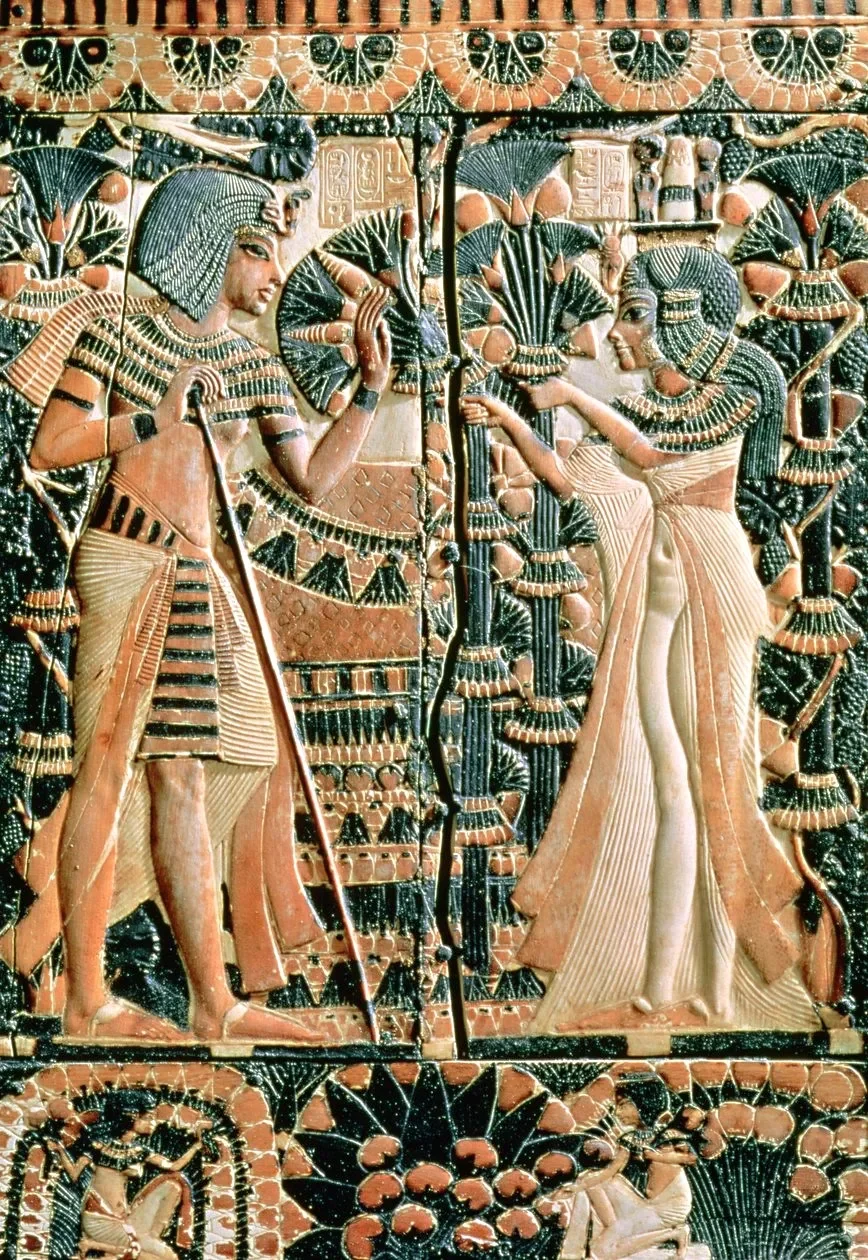
The blue lotus appears in Egyptian culture from the earliest recorded periods. Its daily cycle of opening at sunrise and closing at dusk made it a natural symbol of creation, renewal, and the movement of the sun. Temple priests connected this rhythm to the myth of creation itself. In one version, the creator god Atum emerged from a blue lotus that rose from Nun, the primordial waters, at the beginning of time. His first act was to bring light into darkness. The lotus was the vessel for that first emergence.
Nefertem, the god of perfume and beauty, was depicted as a young man rising from a blue lotus blossom. He was associated with the first rays of the morning sun and with the sacred scent that filled the world at creation. To the Egyptians, this was not metaphor. Scent was understood as a divine substance, a bridge between the material world and the gods. Adorning yourself and your surroundings with fragrance was not simply a personal preference but an act of alignment with the divine order.
The flower appears throughout Egyptian visual records, on temple columns, tomb walls, papyri, and in the personal objects of the dead. Petals of Nymphaea caerulea were found among the burial goods of Tutankhamun, placed there with clear intention. In hieroglyphs, the blue lotus represented Upper Egypt and the life-giving power of the Nile.
Ancient Egypt, Creation and Symbolism
Ritual Use and the Role of Scent
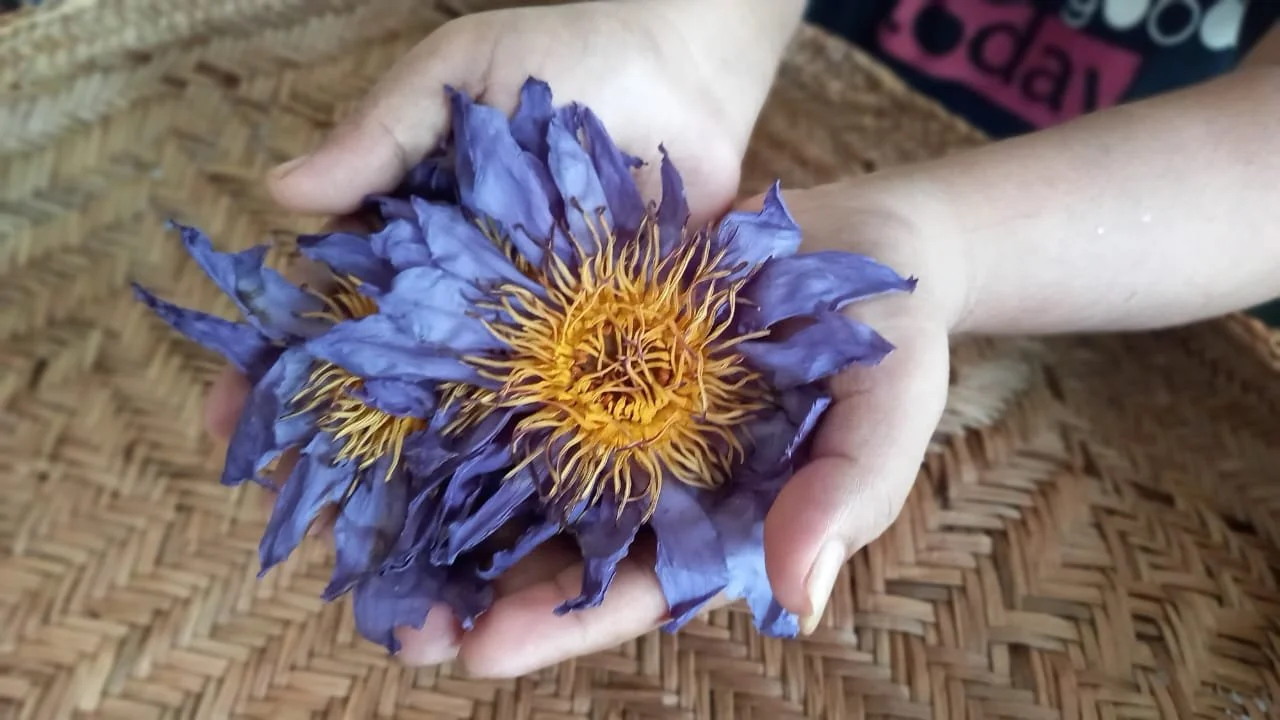
The role of the blue lotus in Egyptian ritual life went beyond symbolism. Depictions in temple scenes show figures holding the flower to their face, inhaling it directly. Whether this was purely ceremonial or indicated knowledge of its aromatic and psychoactive properties remains an open question, but given how central scent was to Egyptian religious practice, the distinction may not have been meaningful to them. Fragrance and spiritual experience were understood as the same thing.
Hathor, goddess of love, joy, and intoxication, was associated with a festival known as the Festival of Drunkenness, in which lotus-infused wine was consumed as part of collective ritual. Recipes from the temple at Edfu reference the word seshen, translated as lotus, within unguent formulas and preparations for specific ailments including headache and fever. No surviving recipe makes a clear distinction between the blue and white lotus, which makes precise interpretation difficult.
What is clear is that the lotus was never simply decorative. It was woven into the language of death and rebirth through the Osiris cycle, used in funerary preparation, placed with the dead, and invoked in texts designed to guide the soul through the afterlife. The Book of the Dead instructs the soul to rise like Nefertem from the blue water lily, to the nostrils of Ra. Scent, in this context, was the medium through which transformation happened.

Aroma and Extraction
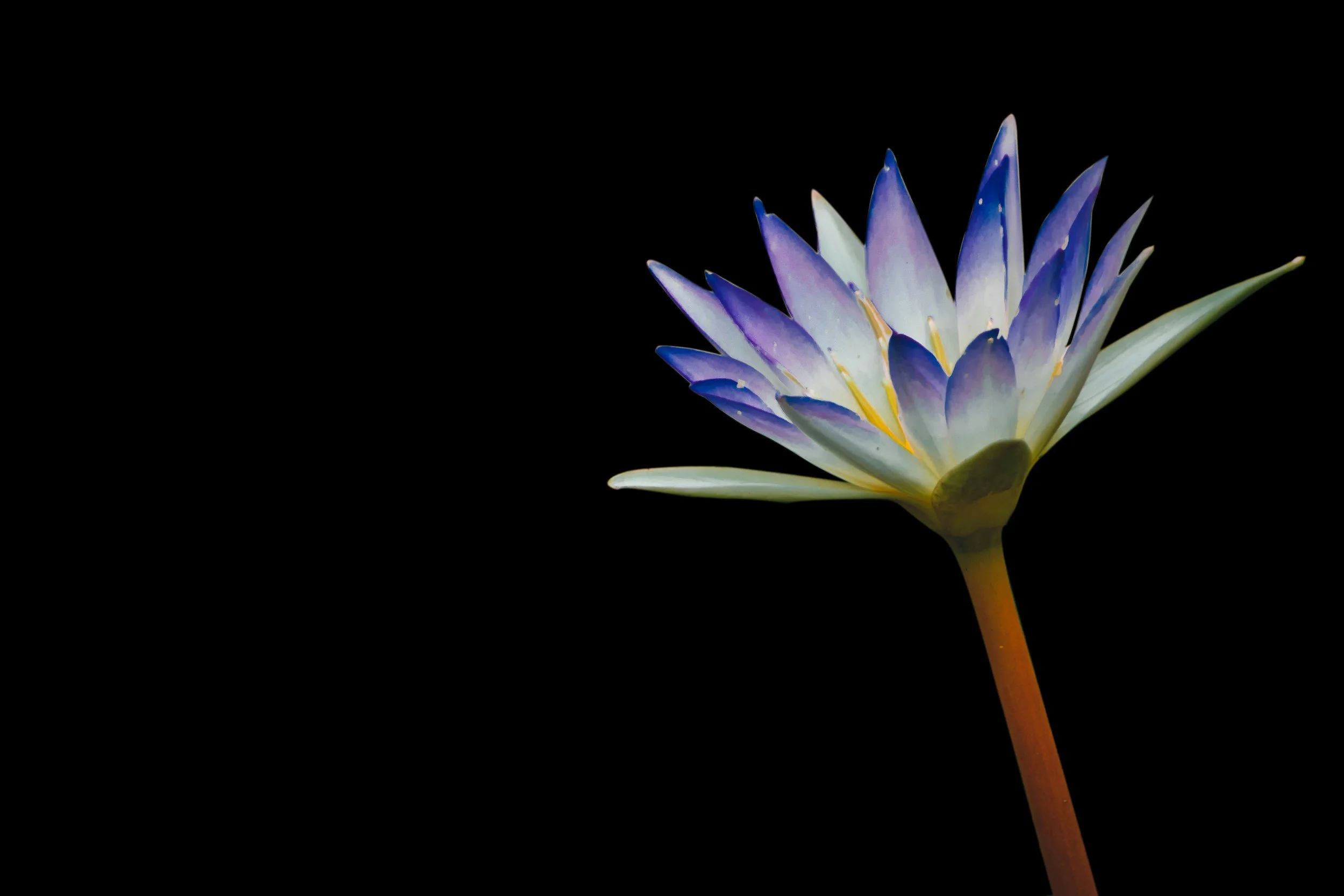
The aroma of genuine Nymphaea caerulea absolute is unlike most floral oils. It does not announce itself immediately or behave in the way you might expect from a flower associated with beauty and divinity. It requires patience.
The opening is waxy and dense, almost almond-like, with a green, slightly aquatic quality that hints at the muddy riverbank conditions the plant grows in. This initial phase can feel almost medicinal to some noses. Stay with it. As it develops over the first hour on skin or a scent strip, the green fades and something warmer and more complex emerges. There are notes of cherry and lilac, a powdery sweetness reminiscent of violet, and underneath it all a quiet, almost lychee-like fruitiness that is difficult to place but immediately recognisable once you know it.
What makes the absolute exceptional as a perfumery material is its longevity. It lingers for hours on skin and for days, sometimes weeks, on a scent strip. It functions naturally as a middle to base note, grounding lighter florals and adding depth to resinous blends. In clinical aromatherapy, it is used primarily through skin application rather than diffusion, given the concentration and cost of the absolute.
The dominant aromatic compounds identified in genuine blue lotus absolute include benzyl acetate, benzyl alcohol, and various long-chain hydrocarbons. These give the oil its characteristic sweetness and waxy texture. It is worth noting that these aromatic compounds are distinct from the alkaloids apomorphine and nuciferine. The chemistry of the scent and the chemistry of the psychoactive properties operate through different constituent groups entirely.
How It Smells and How It Develops
Extraction Methods and What to Look For When Buying

Blue lotus is not steam distilled. The aromatic compounds and the delicate structure of the flower do not survive the heat required for distillation, which means there is no true essential oil of Nymphaea caerulea in the conventional sense. What is produced instead is either a concrete or an absolute, both obtained through solvent extraction.
A concrete is the first stage of extraction, a waxy, semi-solid material containing both aromatic compounds and plant waxes. The absolute is produced by washing the concrete with alcohol to remove the waxes, leaving a more concentrated, fluid aromatic material. CO2 extraction is also used and produces a profile closer to the living flower, though it remains less common and more expensive.
When buying, the botanical name Nymphaea caerulea should appear clearly on the product. Ask for the extraction method. A reputable supplier will be able to tell you whether the material is a concrete, absolute, or CO2 extract, and provide batch documentation or a certificate of analysis. If a supplier describes their product as an essential oil of blue lotus without qualification, treat that as a signal to ask more questions.
The market for blue lotus products has grown significantly in recent years and adulteration is common. Independent research comparing authenticated Nymphaea caerulea samples with products sold online has found that many commercial offerings contain little or no genuine nuciferine, suggesting they are either different water lily species or synthetic substitutes. Provenance, transparency, and documentation are not optional considerations when sourcing this plant.
Chemistry and Safety
Two alkaloids come up whenever blue lotus is discussed: nuciferine and apomorphine. They’re not equally established, and the difference matters if you’re trying to understand what this plant actually does.
Nuciferine is confirmed in genuine Nymphaea caerulea. It binds to both dopamine and serotonin receptors, which is why researchers link it to the more entheogenic qualities historically associated with the plant, including reported effects on dream states and altered perception. It’s currently being investigated for potential use as an antipsychotic and antidepressant, though clinical trials are still early. This is the compound current research treats as the plant’s primary active constituent.
Apomorphine is different. It isn’t something the plant produces itself. It’s a semi-synthetic compound, made by heating morphine with sulfuric acid. It became linked to blue lotus because early researchers assumed the two alkaloids worked together, and because some commercial products test positive for it. But recent analysis of commercial blue lotus samples found apomorphine levels too inconsistent to reflect a natural plant constituent, pointing instead to spiking with the pharmaceutical compound (Krishna et al., 2025).
Apomorphine does have a genuine pharmaceutical use. A synthetic form is prescribed for Parkinson’s disease, where its dopamine-activating action helps regulate motor control, and it has no affinity for opioid receptors despite the name. That’s a fact worth knowing about the compound. It isn’t a fact about blue lotus.
Both alkaloids, where they are present, occur in the raw flower and in concentrated extracts and preparations. Neither is present in meaningful quantities in the aromatic absolute used in perfumery and aromatherapy. The scent and the psychoactive chemistry come from different constituent groups within the plant. Using a properly diluted blue lotus absolute in a perfume blend or skin preparation isn’t the same as ingesting or inhaling a concentrated extract.
My understanding of the apomorphine and nuciferine question has developed since I first started writing about this plant. Earlier pieces of mine may still reflect the older view, where apomorphine was treated as a natural constituent alongside nuciferine. This page reflects where the research, and my own reading of it, currently stand.
Apomorphine and Nuciferine Explained

What We Know, What We Don’t, and Safe Use
The honest answer is that the scientific evidence base for blue lotus is still limited. The historical and anecdotal record is extensive. The pharmacological research is promising but early. Claims of dramatic therapeutic benefit should be read with caution, as should claims that the plant is entirely inert or purely decorative.
What the available evidence does support is that concentrated preparations, particularly vaping or drinking high-dose extracts, can produce significant psychoactive effects including sedation, disorientation, perceptual disturbances, and in some cases tachycardia. Published case reports document these effects in individuals who vaped blue lotus liquid or drank concentrated infusions. In all documented cases, effects resolved within a few hours with supportive care, but the experiences were distressing for those involved.
There’s a separate problem specific to vaping. A 2024 lab analysis of vape products sold as blue lotus found synthetic cannabinoids in 90% of the samples tested (Seither et al., 2024). It’s another reason I don’t recommend vaping any blue lotus product, and another argument for knowing exactly what’s in what you’re using.
At the doses used in aromatherapy, the picture is different. Diluted absolute used topically or in a perfume blend does not deliver the alkaloids in quantities associated with psychoactive effects. The aromatic compounds in this context are the active constituents, not the alkaloids. Anecdotal reports of improved sleep quality and reduced anxiety from drinking blue lotus tea or using diluted products are plausible given what we know about the chemistry, but they remain anecdotal.
As a practitioner, my position is straightforward. Blue lotus is a genuinely interesting plant with a complex chemistry and a long history of intentional use. It deserves to be approached with curiosity and with care, not dismissed as a trend and not overstated as a cure. I work with it as a diluted absolute in topical and perfumery applications, not as a vape or concentrated extract, for the reasons outlined above. I’m honest with my clients about what’s known and what isn’t, and that honesty is the most useful thing I can offer on the subject.

Yatlina and Blue Lotus
The Sourcing Journey and the Cairo Workshop
My interest in the Egyptian blue lotus began long before I started working with it professionally. Growing up in Egypt, the lotus was everywhere as a symbol, on jewellery, in art, carved into the walls of temples I visited as a child. The connection between this flower and Egyptian identity runs deep, and when I came to aromatherapy, returning to it felt inevitable.
Finding a genuine, traceable source took almost two years. The market is flooded with products that use the name without the plant, and I was not willing to offer something I could not verify. I visited suppliers, requested documentation, tested samples for aroma and quality, and turned down a great deal before finding a source I trusted.
It is worth being transparent about something that matters to anyone researching this plant seriously. The blue lotus crop in Egypt is not currently sufficient to produce any viable quantity of absolute for commercial use. Wild populations declined sharply after the construction of the Aswan High Dam, and while there are efforts underway to revive cultivation, these are still in early stages. Sourcing Egyptian-grown blue lotus absolute is not currently possible at any meaningful scale, and any supplier claiming otherwise deserves careful scrutiny.
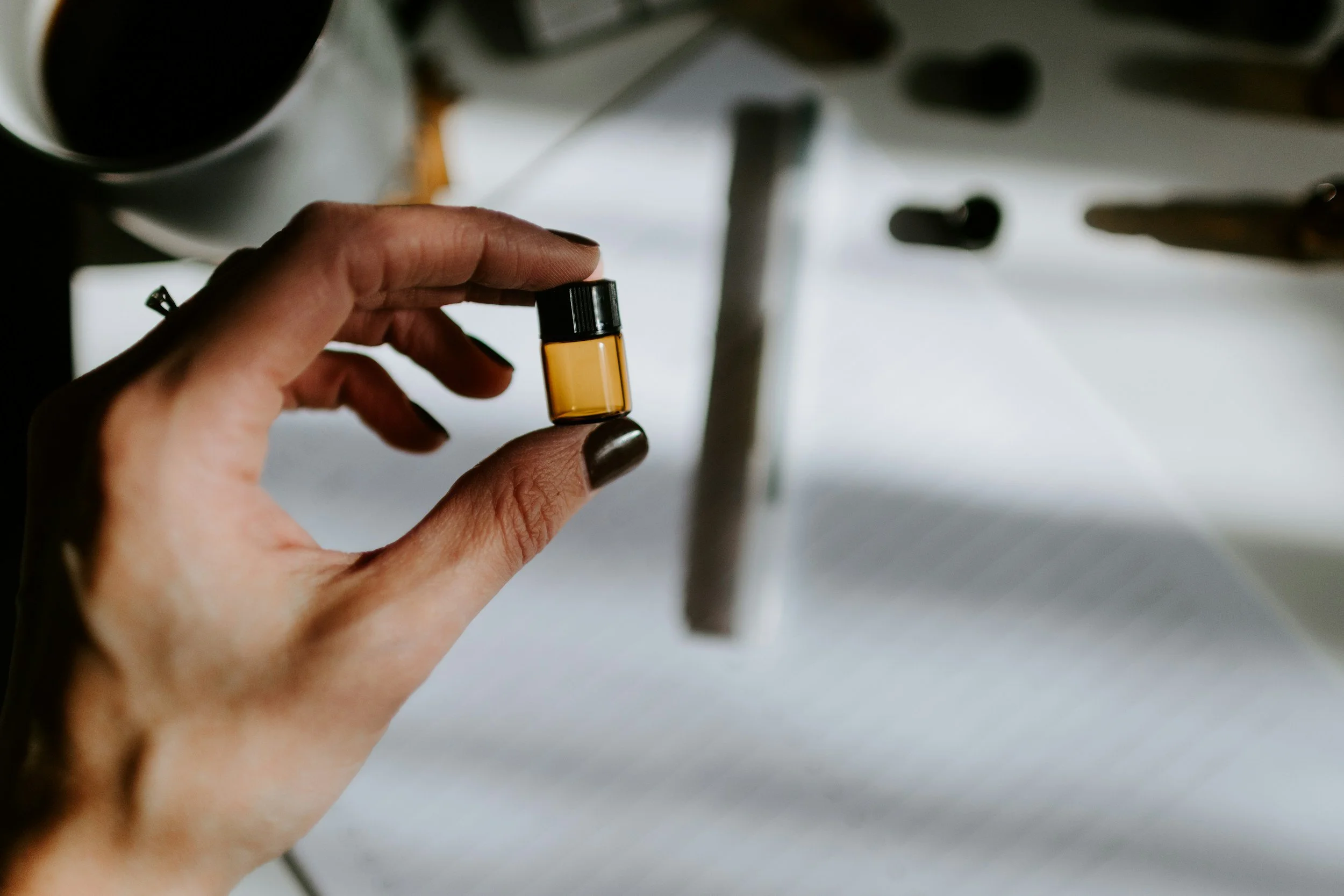
The absolute I source comes from a small family-run farm in Thailand that grows and identifies the plant as Nymphaea caerulea. As with most commercial blue lotus grown in Asia, independent species verification has not been carried out, and I’m transparent about that limitation. What this farm can verify is origin and process: full batch traceability, organic cultivation, and absolute produced on demand rather than held as pre-made stock. That last point matters more than it might seem. Each batch is produced to order, which means quantities are limited and lead times are real. If a product shows as unavailable, it is not a stock management issue. It is simply waiting for the next production run.
The Cairo workshop programme includes a dedicated session on Egyptian blue lotus, exploring its history, chemistry, aroma, and practical applications in aromatherapy and perfumery. Dates are currently being confirmed, but expressions of interest are open now. If you would like to be considered for a place, get in touch through the contact page and I will be in touch as soon as dates are set.
Ongoing Research and the Blue Lotus Booklet
The blue lotus is a subject I keep returning to, and my understanding of it continues to develop. I am currently writing a long-form educational booklet on Nymphaea caerulea that brings together its history, botany, chemistry, aromatic profile, and contemporary use in aromatherapy and perfumery. It is written for aromatherapists, scent practitioners, and anyone with a serious interest in the plant. It is not a product guide or a wellness brochure. It is a reference text.
The booklet draws on published research, archaeological sources, translated temple texts, and my own years of practical experience working with the plant. It will be available later in 2026. If you would like to be notified when it is ready, sign up to the Yatlina newsletter and I will let you know directly.
In the meantime, everything I have published on the subject is available through the resources section below, and I am always happy to discuss the plant further with practitioners, researchers, or anyone with a genuine interest. You can reach me directly through the contact page.
Further Reading and Resources
The following resources bring together published research, botanical reference material, and Yatlina’s own writing on Nymphaea caerulea for anyone wishing to go deeper. *A note on these resources: the earlier articles and the downloadable reference PDF were written before my current understanding of the apomorphine and nuciferine research. Where they differ from this page, treat this page as current.

Egyptian Blue Lotus: A Flower of Mythical Roots: Written by Yasmine ElGhamrawy
An exploration of the plant’s origins in Egyptian creation mythology, its cultural significance, chemical composition, and the search for a genuine source. Includes references to published pharmacological research.*
Egyptian Blue Lotus: Botanical Identity, Aromatic Profile and Research Summary
A detailed reference covering the taxonomy of Nymphaea caerulea, its distinction from other water lily species, its aromatic chemistry, and a summary of current scientific research into its pharmacology and effects. Written for practitioners and researchers, with links to original sources.*
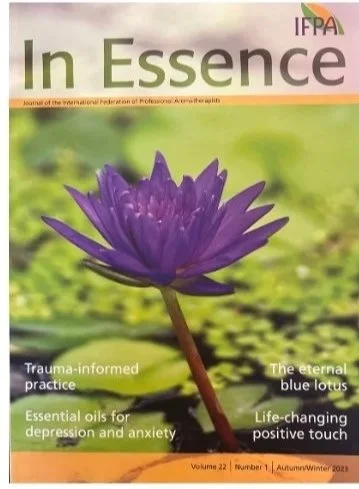
Article Published in the International Federation of Professional Aromatherapists (IFPA) Magazine In Essence.*
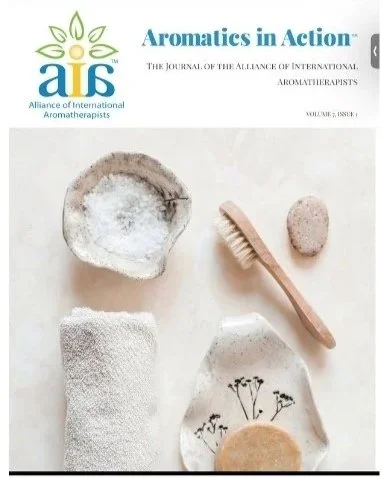
Article Published in the Alliance of International Aromatherapists (AIA) Magazine Aromatics in Action.*

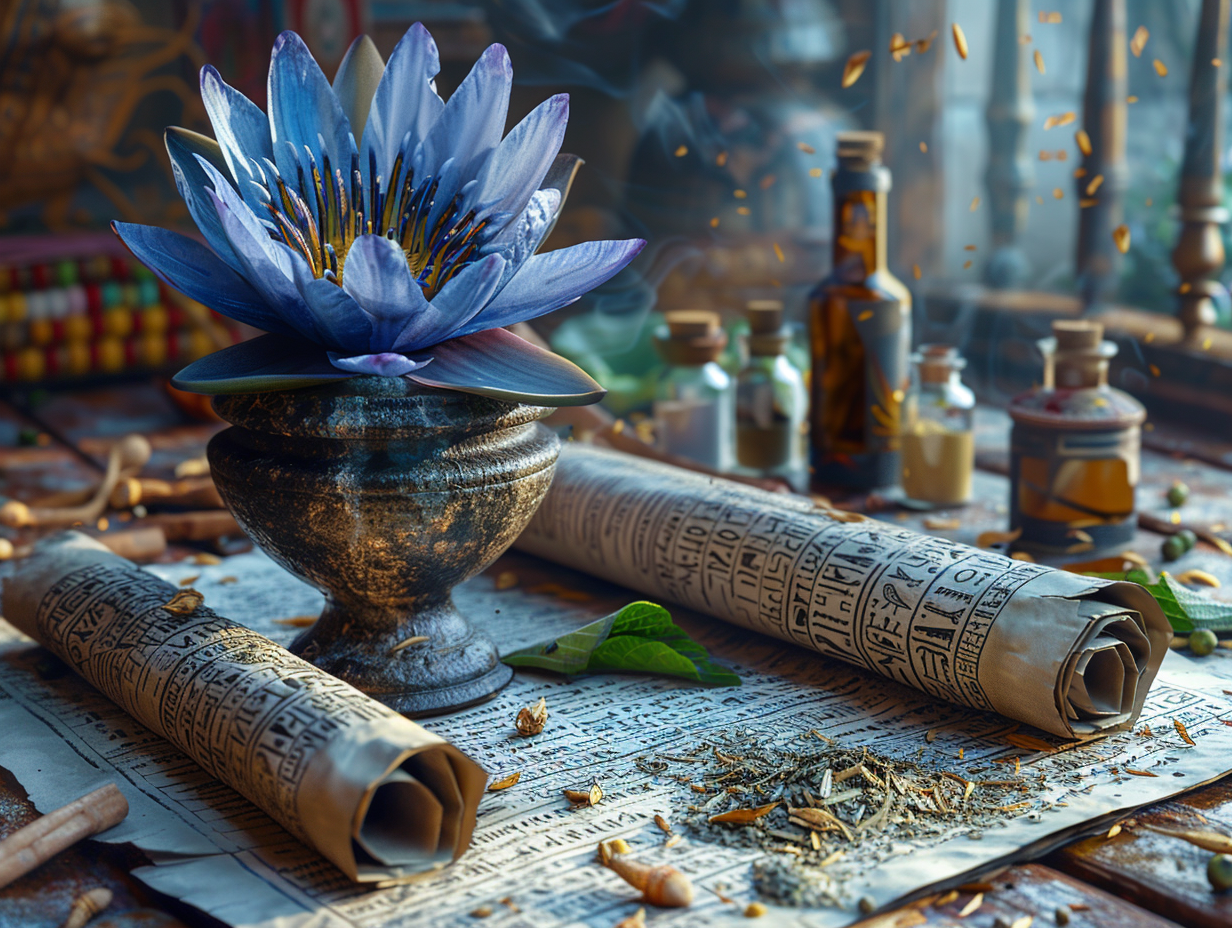
Egyptian Blue Lotus Experience, Cairo
A hands-on workshop exploring the history, botany, aroma, and practical applications of Nymphaea caerulea in aromatherapy and perfumery. Part of the Yatlina Cairo workshop series. Dates to be confirmed. Expressions of interest are open now.
Register your interest → HERE
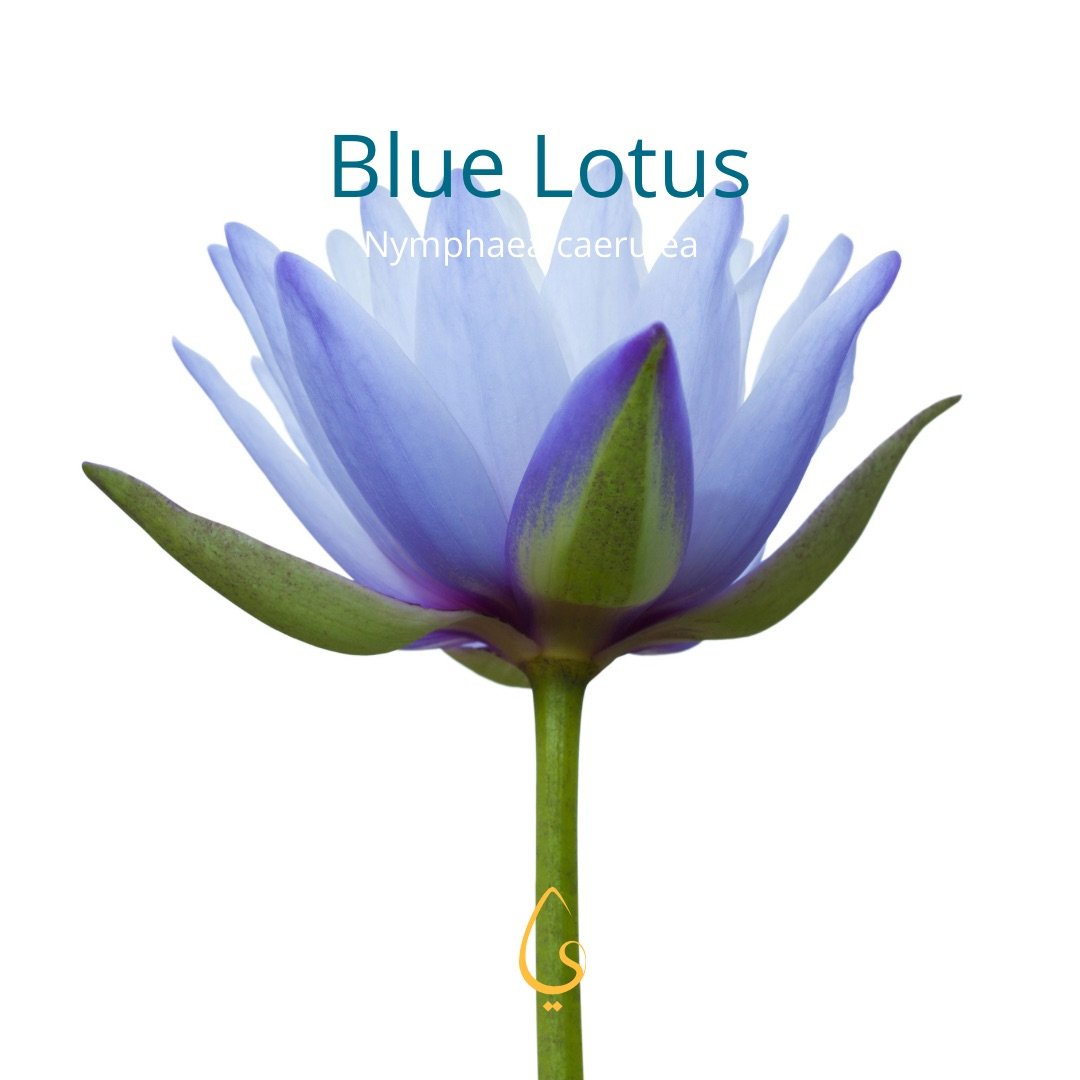
There’s no denying it. A pure Egyptian Blue Lotus Absolute is never a cheap purchase.
If you’d like to experience this beautiful and intriguing oil at a more affordable price, this dilution in jojoba oil might suit you.
With a 1% dilution of Blue Lotus in the oil, you’ll enjoy the notes as they develop over time.


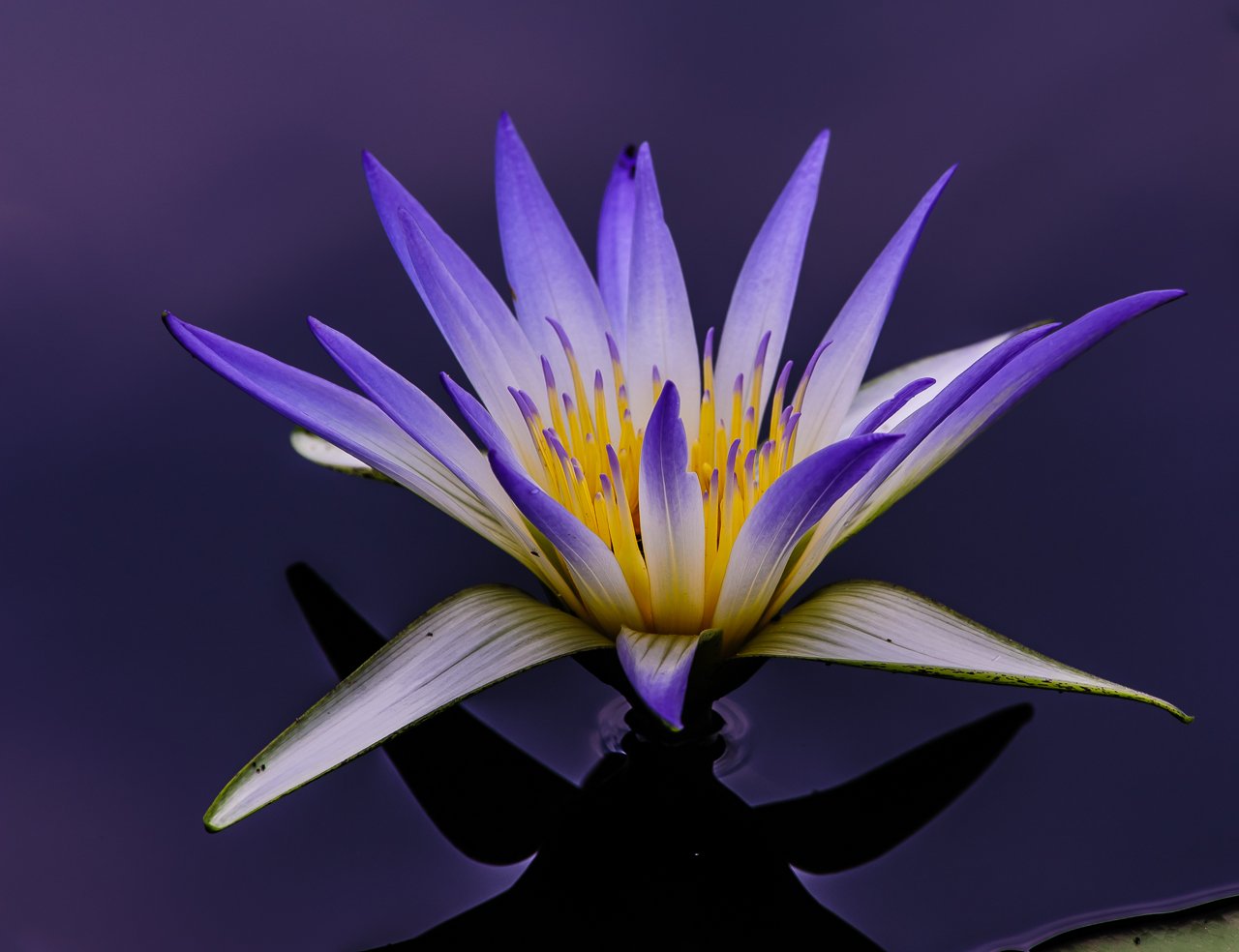
Highly prized and very difficult to find due to its rarity, the Blue Lotus absolute has an intriguing aroma.
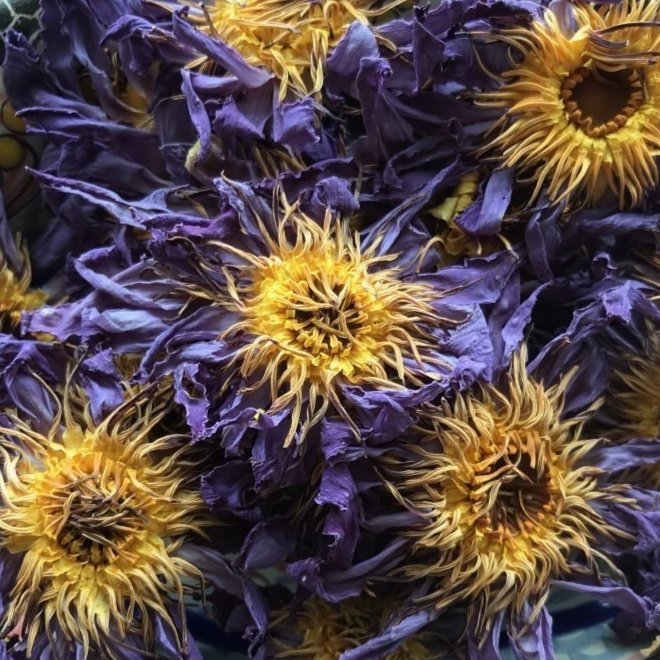


Blue Lotus flowers are grown organically and pesticide free. Enjoy steeped in water for a relaxing drink, or mix with other botanical flowers to create your unique blend and set up a relaxation ritual. Choose from whole flowers or cut ones. Great for relaxing and unwinding.

The Blue Lotus Booklet: Nymphaea caerulea; A Practitioner’s Reference. Written by Yasmine ElGhamrawy
A long-form educational text covering the history, botany, chemistry, aromatic profile, and contemporary use of Egyptian blue lotus in aromatherapy and perfumery. Written for practitioners and serious researchers. Available 2027.
Sign up to the Yatlina newsletter to be notified on release.
Frequently Asked Questions
-
Not exactly. The species, Nymphaea caerulea, is still botanically the same plant. But wild populations along the Nile have declined sharply since the Aswan High Dam altered the river’s flood cycle, and Egyptian-grown blue lotus is not currently available in commercial quantities. What’s sold today as “Egyptian Blue Lotus” is rarely grown in Egypt, mine included, and I say that openly rather than let the name imply otherwise.
-
Used properly diluted in topical aromatherapy or perfumery, yes, with the same care you’d apply to any concentrated botanical extract. The safety concerns documented in medical literature relate specifically to concentrated preparations taken in high doses, through vaping or strong infusions, not to a diluted absolute applied to skin. I go into this in more detail in the Chemistry and Safety section above.
-
Dried blue lotus flowers are traditionally steeped as a tea, and this is one of the more common and mild ways the plant is used. As with any botanical with active compounds, moderation matters, and I’d always recommend starting with a small amount to see how you respond.
-
They’re entirely different plants from separate genera. Nymphaea caerulea, the blue lotus, is a water lily native to Egypt and East Africa. Nelumbo nucifera, the sacred lotus of Asia, is unrelated botanically, chemically, and historically, despite frequently being sold under the same name.
-
From a small family-run farm in Thailand that grows Nymphaea caerulea organically and produces absolute on demand, with full batch traceability. I’m transparent about this because Egyptian-grown blue lotus isn’t commercially available, and I’d rather tell you exactly where mine comes from than let the name do the talking.
-
Dried blue lotus flowers are traditionally steeped as a mild evening tea, and many people use it this way to support winding down. I’d treat any sleep-related claims with the same caution I apply throughout this page: the historical use is well documented, the modern clinical research is still early, and a calming tea ritual is not the same thing as a proven sleep treatment. If you’re dealing with a sleep disorder, that’s a conversation for a doctor, not a flower.
-
In most places, yes. It’s not a controlled substance in the UK or Egypt, and it’s widely sold as dried flowers, tea, and absolute. In the US, it’s not federally controlled, but Louisiana bans its cultivation, sale, and purchase, so US-based readers should check their state law rather than assume federal status covers them. A small number of other countries restrict it too, so if you’re unsure, check your local regulations before ordering. It’s also not approved by the FDA for consumption, which is true of most botanicals sold this way